
7 Ps of Marketing: A Complete Guide
Every business sells something to someone. But selling well isn’t luck; it’s planning. That planning has a name: the marketing mix. And these days, the old “4 Ps” isn’t enough on its own. Most marketers now work with a bigger version called the 7 Ps of marketing.
If you’re a student, a small business owner, or just starting in marketing, this guide breaks it all down in plain language. No jargon, no confusion.
What Are the 7 Ps of Marketing?
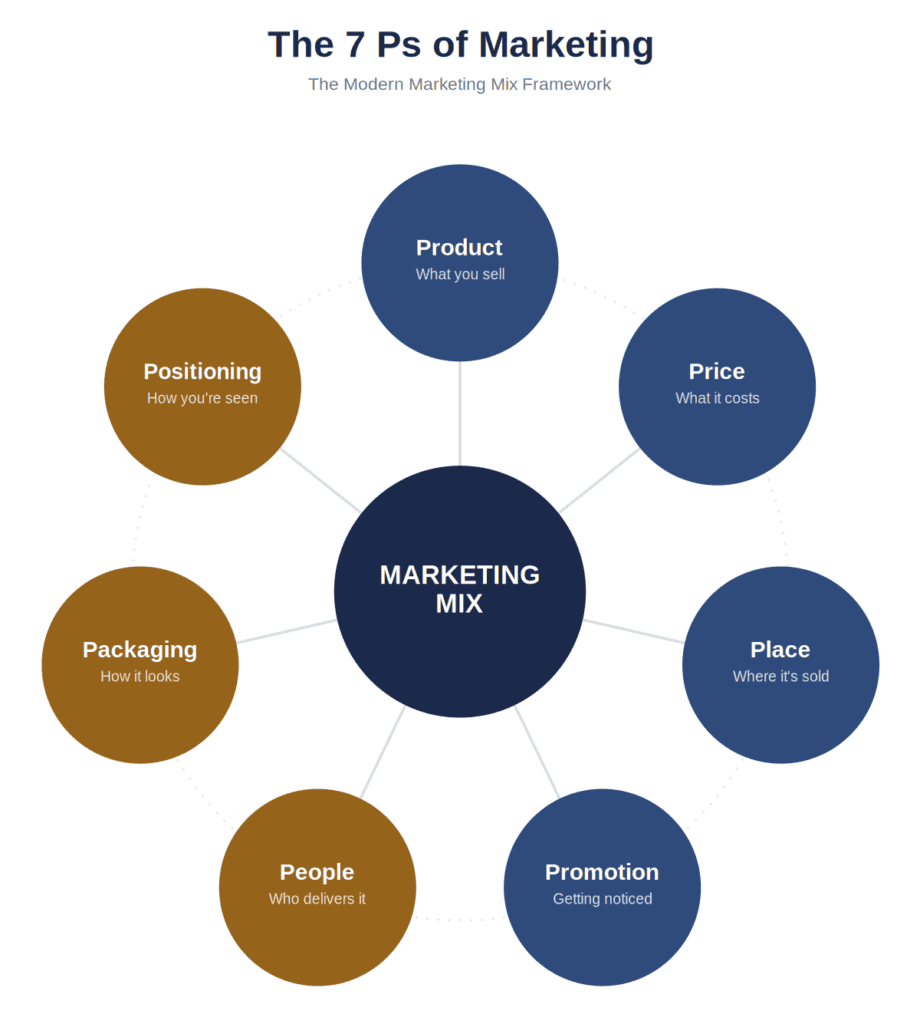
The 7 Ps of marketing are seven areas every business needs to manage well. Think of them as seven levers you can pull to shape how customers see your brand, and why they choose to buy from you.
Here they are at a glance:
| Product | What you’re actually selling | A phone, a haircut, an online course |
| Price | What you charge for it | ₹999 vs ₹9,999 for a similar item |
| Place | Where customers find and buy it | Online store, local shop, Amazon |
| Promotion | How you tell people it exists | Instagram ads, discounts, word of mouth |
| People | Who delivers the experience | Sales staff, support team, delivery boys |
| Packaging | How it looks and feels physically | Box design, the “unboxing” moment |
| Positioning | How it’s remembered in the customer’s mind | “Affordable” vs “premium” |
Let’s go through each one properly.
1. Product
Product is where every business starts. It’s not just the item itself; it’s everything that comes with it, like quality, features, design, and even the warranty.
Before you touch pricing or promotion, ask:
Does this solve a real problem?
Is it better than what’s already out there?
What makes someone pick this over a competitor?
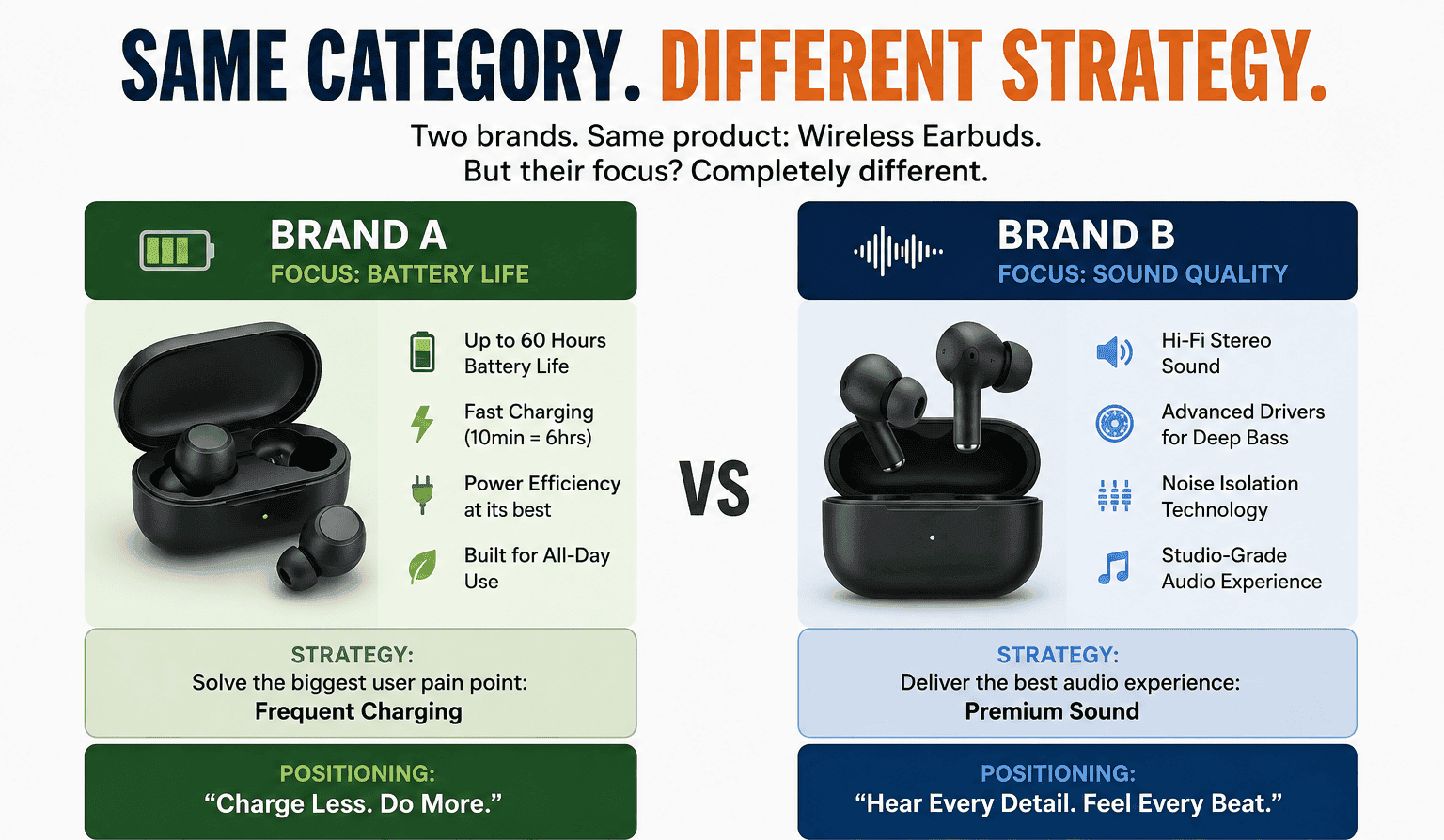
Here’s an easy example: two brands can both sell “wirel
Here’s an easy example: two brands can both sell “wireless earbuds.” One brand builds its whole product around battery life. The other builds around sound quality: same category, completely different product strategy.
2. Price
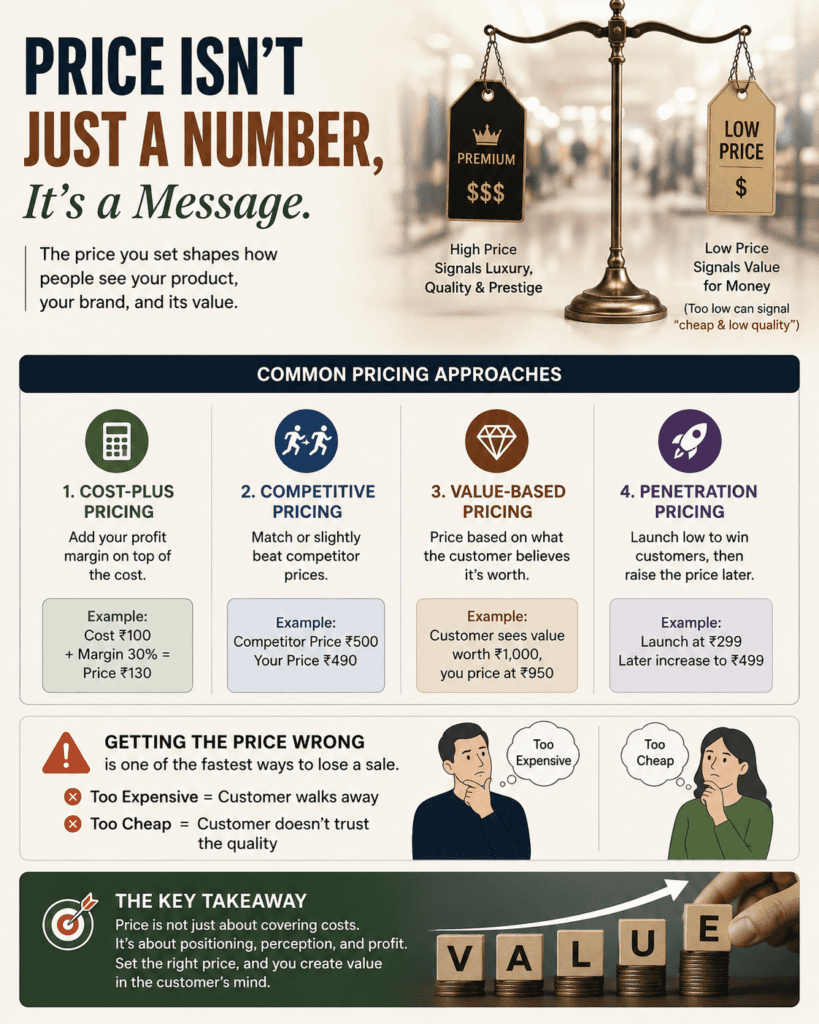
Price isn’t just a number on a tag; it’s a message. A high price can signal luxury. A low price can signal value for money (or, if you’re not careful, it can also signal “cheap and low quality”)
A few common pricing approaches:
1. Cost-plus pricing – add your profit margin on top of the cost
2. Competitive pricing- match or slightly beat competitor prices
3. Value-based pricing- price based on what the customer believes it’s worth
4. Penetration pricing- launch low to win customers, then raise the price later
Getting the price wrong is one of the fastest ways to lose a sale. Either the customer thinks it’s too expensive, or they don’t trust something priced “too cheap.”
3. Place
Place is simply about availability. It doesn’t matter how good your product is if people can’t easily find or buy it.
Ask yourself:
Where does your customer already shop?
Should you sell online, offline, or both?
Do you need a distributor, or can you sell directly?
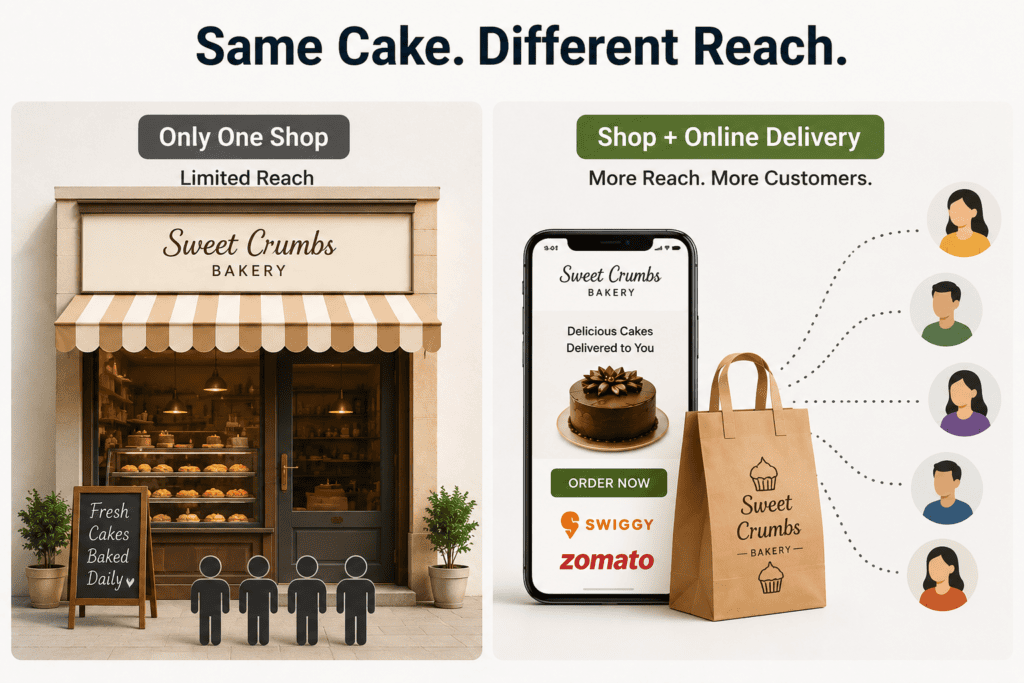
A local bakery that only sells from one shop reaches far fewer people than one that also delivers through Swiggy or Zomato. Same cake, different reach because of place.
4. Promotion
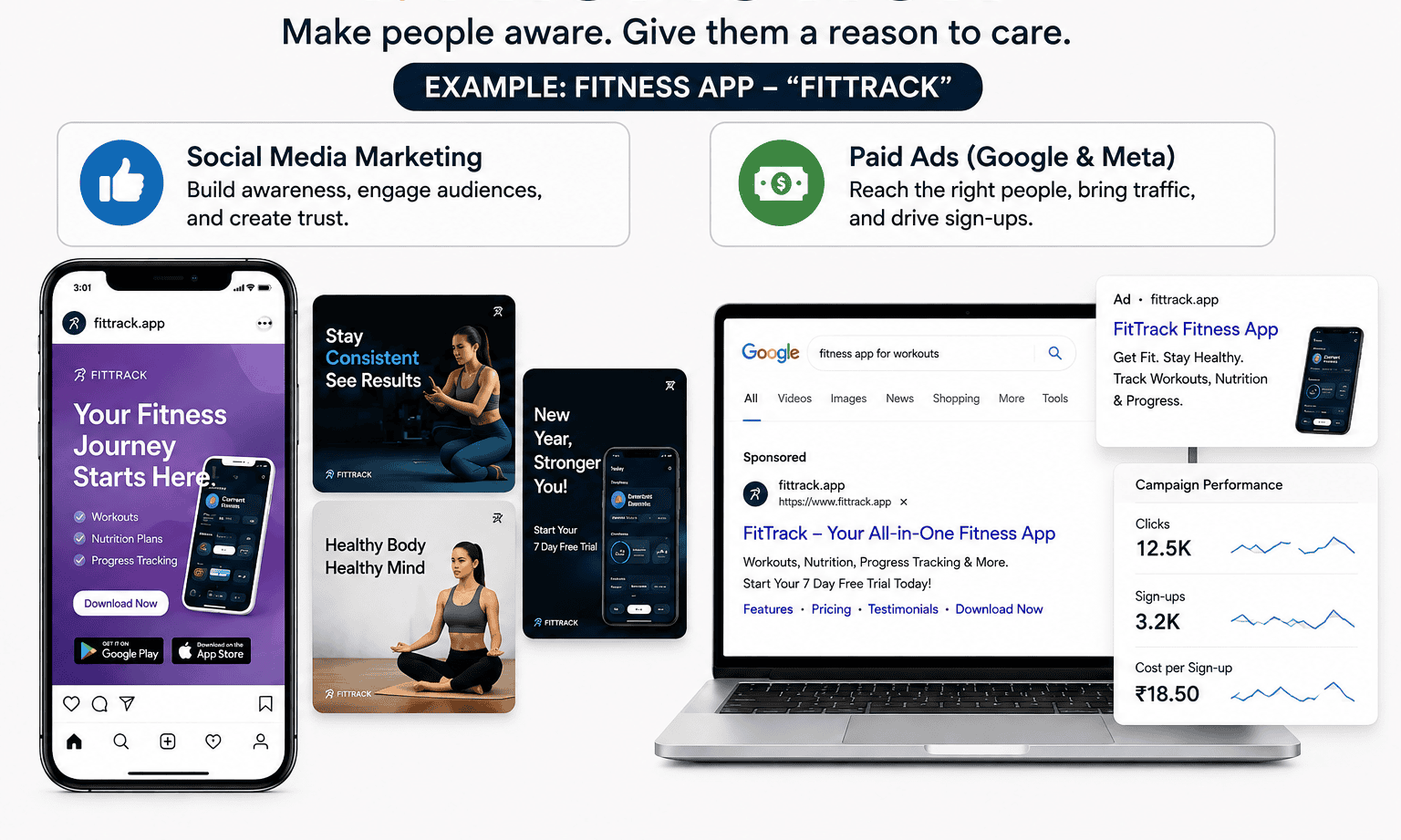
Promotion is how you make people aware that your product exists and give them a reason to care.
This usually includes:
Social media marketing
Paid ads on Google or Meta
Email marketing
Offers and discounts
Influencer collaborations
Plain old word of mouth
Good promotion doesn’t just shout “buy this now.” It answers a question the customer was already asking.
5. People
People are the most overlooked P, but they quietly decide whether a customer comes back a second time.
This covers:
Your sales team
Customer support
Delivery staff
Even how your website “talks” to a visitor
Two restaurants can serve the same butter chicken. The one with faster, friendlier service usually gets the better reviews and the repeat customers.
6. Packaging
Packaging isn’t just protection during shipping. For a lot of customers, it’s the first physical thing they touch from your brand.
Good packaging can:
Build instant trust (“this feels premium”)
Reduce damage in transit
Create a memorable unboxing moment
Reinforce your brand’s colours and identity
Think of brands like Amul or Cadbury. Their packaging is recognisable from a distance, even before you read the name.
7. Positioning
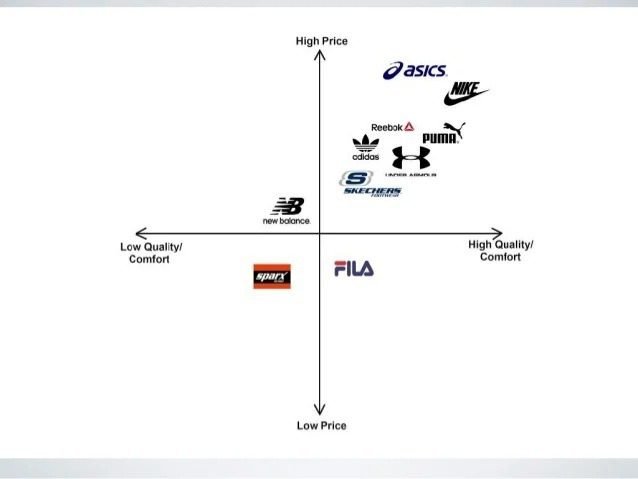
Positioning is the space your brand occupies inside a customer’s head. It answers one question: “Why should I remember this brand as different?”
Some common positioning angles:
Affordable- “we’re the budget-friendly option”
Premium- “we’re the luxury choice”
Fast- “we deliver the quickest”
Trustworthy- “we’ve been around for 20 years”
Nike doesn’t just sell shoes. It’s positioned around performance and ambition. That positioning is worth more than any single shoe feature could ever be.
Why the 7 Ps Model Still Matters
Some people ask, “Isn’t the 4 Ps model enough?” Not really not for service businesses, and not for brands trying to build long-term loyalty.
The 7 Ps model earns its place because:
It works for both physical products and services
It forces you to think beyond just “the product”
It lets small businesses compete with bigger ones by winning on experience (people, packaging) instead of just budget (promotion)
Whether you’re running a small shop or building a career in marketing, these seven elements provide a simple framework for judging any business, including your own.
FAQs
1. What are the 7 Ps of marketing?
The 7 Ps are Product, Price, Place, Promotion, People, Packaging, and Positioning seven areas businesses manage to build a complete marketing strategy.
2. What’s the difference between the 4 Ps and the 7 Ps of marketing?
The 4 Ps (Product, Price, Place, Promotion) focus mainly on physical products. The 7 Ps add People, Packaging, and Positioning, which makes the model far more useful for services and brand building.
3. Which P is the most important?
There isn’t one “most important” P; they work as a set. But Product and Positioning are usually seen as the foundation, since the other five build on top of them.
4. Can small businesses actually use the 7 Ps model?
Yes, and they often benefit the most from it. Focusing on People and Packaging helps a small business stand out without needing a huge ad budget.
5. Is packaging really considered “marketing”?
Yes. Packaging shapes first impressions, builds trust, and can even bring customers back, which makes it a real part of how people experience your brand.