
The Detective Work Behind Successful Marketing 🔍📊
Imagine launching a new product with a beautiful logo, an expensive advertisement catchy tagline, and a huge marketing budget
You proudly launch it…
And then…
CRICKETS. 🦗
Nobody buys it.
Nobody talks about it.
Nobody even knows it exists.
So, what went wrong?
The problem may not be your product. The problem could be that you never asked the most important question:
“What does the customer actually want?”
That is where marketing research comes in.
Marketing research is like being a detective. Instead of searching for fingerprints, marketers search for customer needs, preferences, problems, buying habits, competitors, market trends, and opportunities.
In simple words:
Marketing research means finding out what people want before spending money trying to sell it to them.
And yes, it can save you from turning your marketing budget into an expensive donation. 😂
🔍 What Is Marketing Research?
Marketing research is the systematic process of collecting, analyzing, and interpreting information about customers, competitors, products, and the market.
It helps businesses answer questions such as:
- Who are our customers?
- What do they actually need?
- Why do they buy?
- Why don’t they buy?
- What price are they comfortable paying?
- Who are our competitors?
- What are competitors doing better?
- What trends are becoming popular?
- How can we improve our product?
Without research, marketing becomes:
“I think people will like this.”
With research, it becomes:
“The data says people want this.”
That difference can make a huge impact on business success.

🕵️ Market Research Methods: The Marketing Detective’s Toolkit
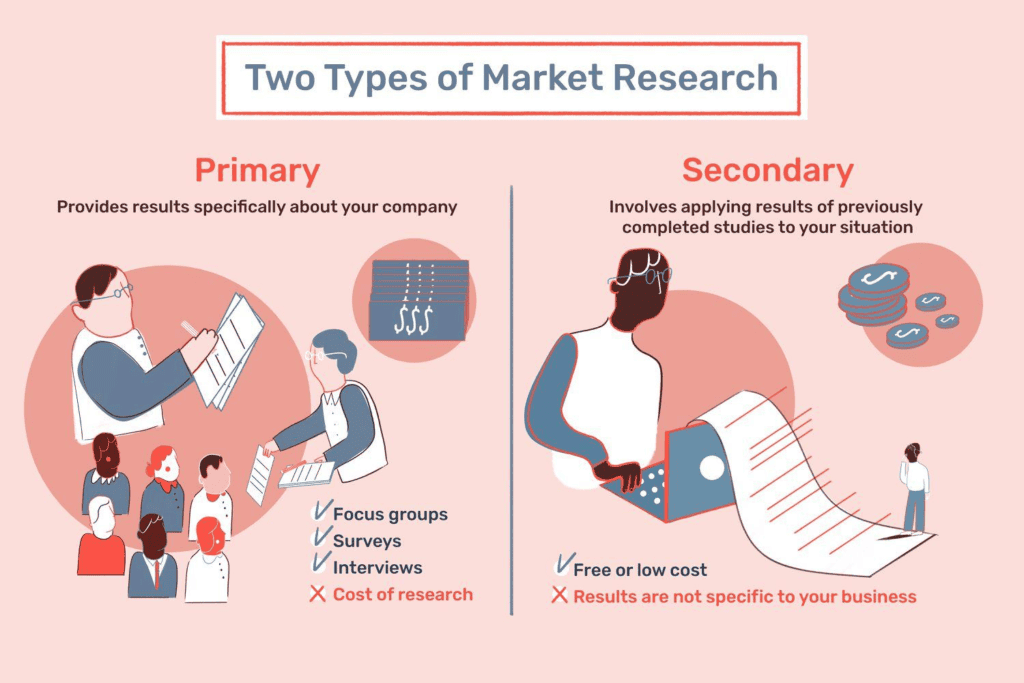
There are many market research methods, but they can broadly be divided into two categories:
1. Primary Market Research
Primary market research means collecting fresh information directly from customers.
Examples include:
- Customer surveys
- Interviews
- Focus groups
- Observations
- Product testing
- Feedback forms
For example, imagine a company wants to launch a new energy drink.
Instead of simply assuming that customers want a new flavor, the company can ask people:
“Which flavor would you buy?”
Chocolate? ❌
Mango? 🥭
Lemon? 🍋
Spicy Pizza? 😳
Congratulations, your research just saved the company from a very questionable product launch.
2. Secondary Market Research
Secondary market research means using information that already exists.
Sources can include:
- Government reports
- Industry reports
- Research publications
- Competitor websites
- Market statistics
- Google Trends
- Company reports
- Online databases
Secondary research is useful because you don’t always have to reinvent the wheel.
Sometimes the information you need is already available.
You just have to know where to look.
📊 Quantitative vs Qualitative Research
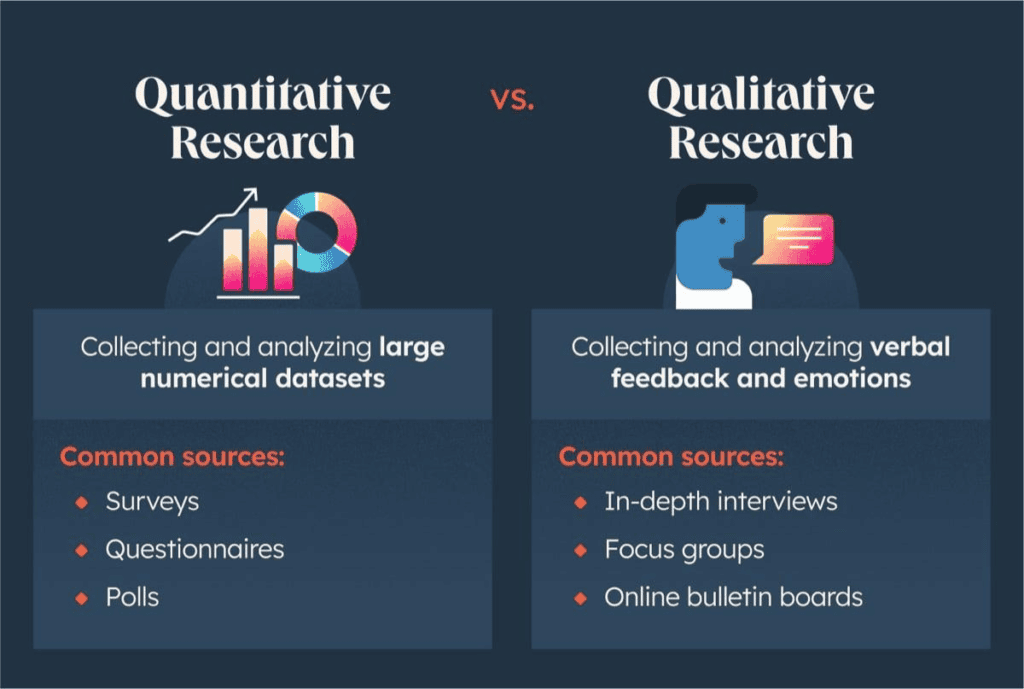
Marketing research generally uses two major types of data.
Quantitative Research Data
Quantitative research data deals with numbers.
For example:
- 65% of customers prefer online shopping.
- 40% purchase a product because of discounts.
- 72% use Instagram before buying a product.
Numbers are useful because they help marketers identify patterns and measure results.
Think of quantitative research as:
“Show me the numbers!” 📊
Qualitative Research Techniques
Qualitative research techniques focus on opinions, feelings, experiences, and motivations.
Methods include:
- Interviews
- Focus groups
- Open-ended surveys
- Customer discussions
- Observation
For example, instead of asking:
“Do you like our website? Yes or No?”
You could ask:
“What do you think about your experience while using our website?”
Now customers can actually explain what they think.
And sometimes…
They explain A LOT. 😂
🧠 Consumer Behavior Analysis: Why Do People Buy?
Understanding consumer behavior analysis is one of the most important parts of marketing research.
Customers don’t always buy products because they need them.
Sometimes they buy because:
- They want convenience.
- They want status.
- They want to save time.
- They want to solve a problem.
- Their friend recommended it.
- They saw an influencer using it.
- They simply thought, “This looks cool.”
Marketers study what customers do before, during, and after a purchase.
Understanding these behaviors helps businesses create better products and advertisements.
🎯 Buyer Persona Development
Once you collect customer information, you can create a buyer persona.
A buyer persona is a fictional representation of your ideal customer based on real research.
For example:
Meet “Rahul” 👨💻
- Age: 24
- Location: Chandigarh
- Occupation: Digital marketing student
- Interests: Instagram, SEO, AI tools
- Problem: Wants practical marketing knowledge
- Buying behavior: Researches reviews before purchasing
- Favorite phrase: “Is there a discount?” 😂
Instead of creating content for a vague audience, marketers can create content specifically for people like Rahul.
🥊 Competitive Analysis Framework
Your customers aren’t comparing your business with your imagination.
They’re comparing you with your competitors.
A competitive analysis framework helps businesses study competitors based on:
- Pricing
- Products
- Features
- Customer reviews
- Website
- Social media
- Content
- Advertising
- Strengths
- Weaknesses
Ask:
What are competitors doing well?
Where are customers unhappy?
What opportunities are competitors missing?
The goal isn’t to copy competitors.
The goal is to discover opportunities to become better or different.
💪 SWOT Analysis in Marketing
One popular research framework is SWOT analysis in marketing.
SWOT stands for:
S — Strengths
What are you good at?
W — Weaknesses
Where do you need improvement?
O — Opportunities
What new opportunities exist?
T — Threats
What could negatively affect your business?
For example:
Strength: Excellent customer service
Weakness: Small marketing budget
Opportunity: Growing online demand
Threat: Strong competitors
📈 Market Trend Analysis
Markets don’t sit still.
Customer preferences change.
Technology changes.
Social media trends change.
Even memes change before you finish understanding the previous one. 😂
Market trend analysis helps businesses identify changes in:
- Customer behavior
- Technology
- Industry demand
- Competitor activity
- Social media
- Consumer preferences
Businesses that understand trends early can adapt before everyone else.
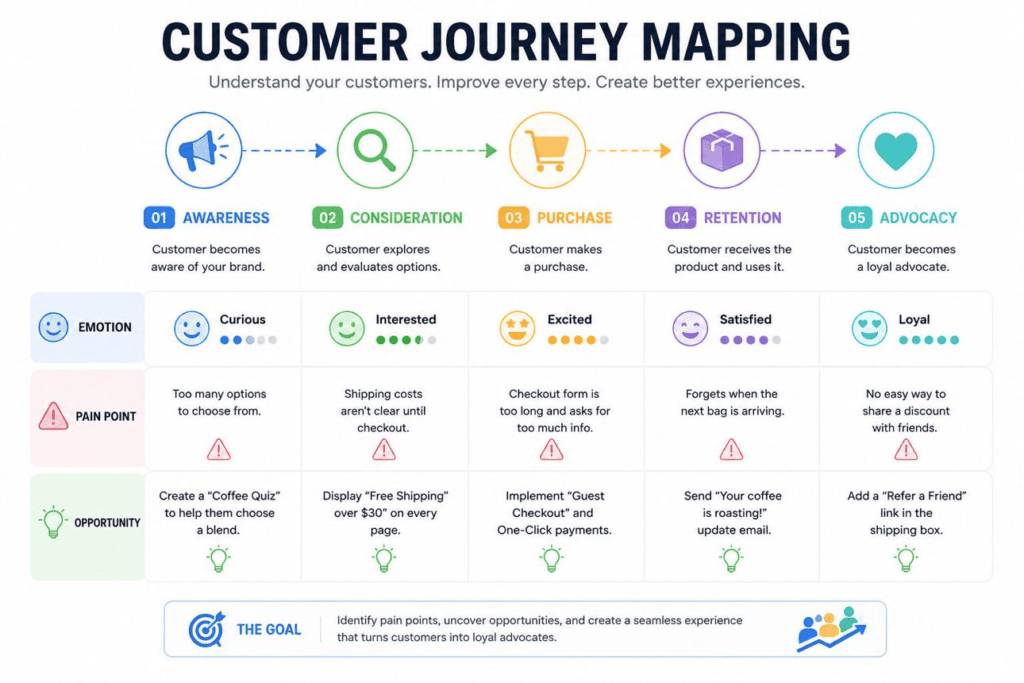
🛒 Customer Journey Mapping
A customer doesn’t magically wake up and purchase your product.
There is usually a journey:
Awareness → Interest → Research → Comparison → Purchase → Experience → Loyalty
This is called customer journey mapping.
For example:
A customer sees your Instagram Reel.
↓
Visits your website.
↓
Reads reviews.
↓
Checks competitors.
↓
Compares prices.
↓
Finally purchases.
↓
Receives the product.
↓
Leaves a review.
Every step matters.
If your website takes five minutes to load, the customer may complete their journey…
Straight to your competitor. 😂
📱 Marketing Analytics Techniques
Research doesn’t stop after collecting data.
You need to analyze it.
Marketing analytics techniques can help businesses understand:
- Website traffic
- Conversion rates
- Customer acquisition
- Social media performance
- Campaign results
- Sales
- Customer behavior
For example:
Your Instagram post gets 100,000 views.
Sounds amazing!
But if only two people visit your website and nobody purchases…
The marketing team needs to investigate.
Views are nice. Results are nicer.
🚀 Why Marketing Research Matters
Marketing research helps businesses reduce guesswork.
It can help you:
- Understand customers
- Find profitable opportunities
- Identify competitors
- Improve products
- Create better advertisements
- Set better prices
- Reduce marketing waste
- Improve customer satisfaction
- Discover market trends
- Make smarter decisions
Think of it this way:
Without research:
“I hope customers like this.”
With research:
“We know customers want this because the data tells us.”
That is the difference between guessing and marketing intelligently.
🎯 Final Thoughts
Marketing research may sound like a serious business term, but at its heart, it’s simply about understanding people before trying to sell something to them.
The best marketers don’t just shout:
“BUY MY PRODUCT!”
They first ask:
“Who are you?”
“What do you need?”
“What problem are you trying to solve?”
“What makes you choose one product over another?”
Once you understand those answers, marketing becomes much easier.
So before launching your next product, advertisement, website, or social media campaign, remember:
Research first. Marketing second. Panic never. 😎
Because in marketing, the person with the best guess isn’t always the winner.
The person with the best information usually is. 🔍📊