
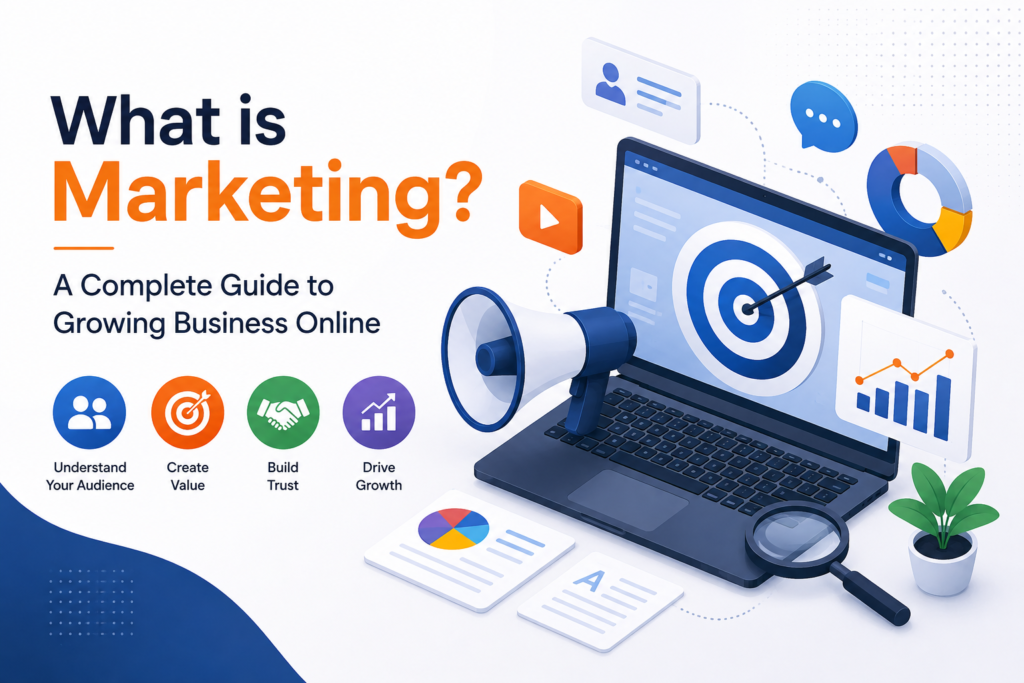
Marketing is the process of understanding customer needs, creating value, and communicating that value to the right audience. In simple terms, marketing helps businesses connect with potential customers, build trust, and encourage them to choose their products or services.
In today’s digital world, marketing goes beyond traditional advertising. Businesses use SEO, social media, content marketing, email marketing, paid advertising, and other digital channels to reach their target audience.
Whether you are a small business, startup, local business, or growing company, a strong marketing strategy can increase brand awareness, attract potential customers, generate leads, and support long-term growth. In addition, it helps businesses build stronger relationships with their target audience. As a result, a well-planned approach can improve customer engagement and support sustainable business growth.
In this guide, we will explain what marketing is, why it matters, and explore its major types. Furthermore, you will learn how digital strategies can help businesses compete in today’s online world.
1. What Is Marketing?
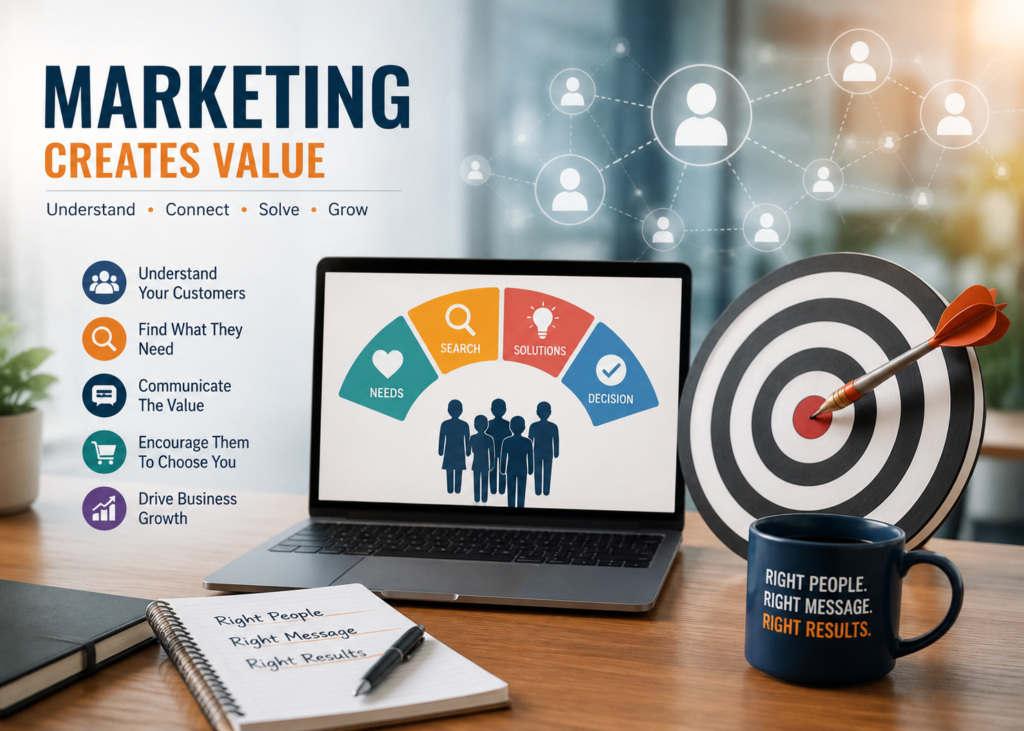
Marketing is the process of identifying customer needs, creating value, communicating that value, and encouraging people to choose your product or service.
In simple words:
Marketing means getting your business in front of the right people and giving them a reason to choose you.
A successful marketing strategy is not only about selling. It is about understanding:
- Who your customers are
- What problems they have
- What they are searching for
- Where they spend their time
- What influences their buying decisions
- How your business can solve their problems
As a result, when these factors come together, marketing becomes a powerful tool for sustainable business growth.
2. Why Is Marketing Important for a Business?
Even with an excellent product or service, customers cannot choose your business if they don’t know it exists.
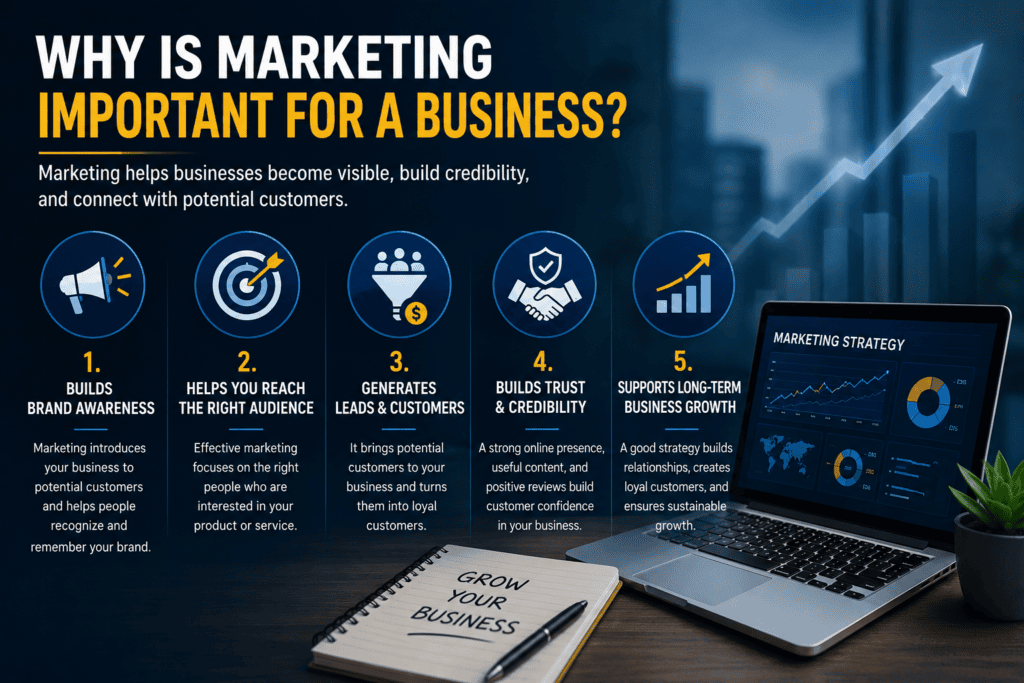
Marketing helps businesses become visible, build credibility, and connect with potential customers.
1. Builds Brand Awareness
Marketing introduces your business to potential customers. Consistent branding across your website, search engines, social media, and other channels helps people recognize and remember your business.
2. Helps You Reach the Right Audience
Effective marketing is not about reaching everyone. It is about reaching the right audience.
For instance, a local clothing store does not need to advertise to the entire country. Instead, it may get better results by targeting local customers interested in fashion and clothing. As a result, targeted campaigns can help the business reach more relevant customers and improve its marketing results.
3. Generates Leads and Customers
Marketing can bring potential customers to your website, social media pages, or business location. With an effective strategy, these visitors can be converted into qualified leads. Over time, consistent engagement can turn those leads into paying customers and contribute to sustainable business growth.
4. Builds Trust and Credibility
People usually research a business before making a purchase. Moreover, a professional website, useful content, positive reviews, active social media presence, and strong search visibility can build trust and give potential customer greater confidence in their decision.
5. Supports Long-Term Business Growth
Marketing should not focus solely on quick sales. Instead, a well-planned strategy helps build a recognisable brand, strengthen customer relationships, and create a sustainable lead source. Over time, these efforts can lead to growth and long-term business success
3. What Are the Different Types of Marketing?
Marketing has changed significantly with the growth of the internet. Businesses now have many ways to connect with their audience.
Some of the most important marketing channels include:
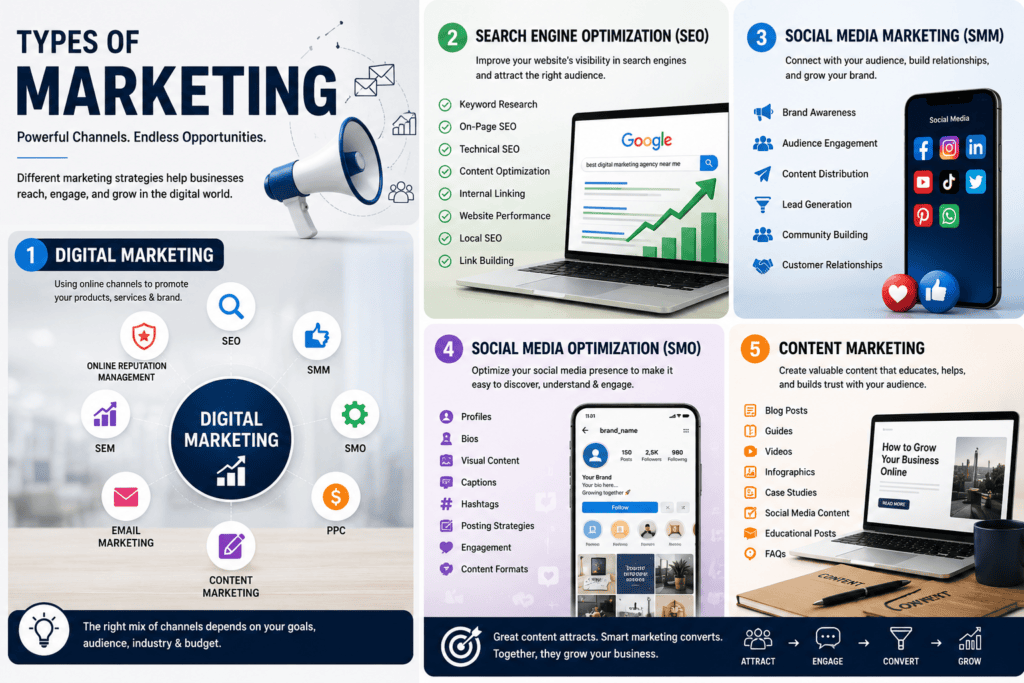
1. Digital Marketing
Digital promotion uses online channels to promote products, services, and brands.
It can include:
- Search Engine Optimization (SEO)
- Social Media Marketing (SMM)
- Social Media Optimization (SMO)
- Search Engine Marketing (SEM)
- Pay-Per-Click Advertising (PPC)
- Content Marketing
- Email Marketing
- Website Marketing
- Online Reputation Management
A business doesn’t need every channel. The right combination depends on its goals, audience, industry, and budget.
Search Engine Optimization (SEO)
SEO helps improve a website’s visibility in search engines for relevant searches.
For example, if someone searches for:
“best digital marketing agency near me”
A business offering digital marketing services would want its website to appear prominently in relevant search results.
SEO involves areas such as:
- Keyword research
- On-page SEO
- Technical SEO
- Content optimization
- Internal linking
- Website performance
- Local SEO
- Authority and link-building strategies
SEO is particularly valuable because it can help businesses attract people who are already searching for their products or services.
Social Media Marketing
Social media platforms allow businesses to communicate directly with their audience.
A strong social media strategy can help with:
- Brand awareness
- Audience engagement
- Content distribution
- Lead generation
- Community building
- Customer relationships
However, successful social media marketing is more than simply posting every day. Businesses need relevant content, consistent branding, audience research, and a clear objective.
Social Media Optimization
Social Media Optimization focuses on improving a brand’s presence and performance on social media platforms.
This can include optimizing:
- Profiles
- Bios
- Visual content
- Captions
- Hashtags
- Posting strategies
- Engagement
- Content formats
The goal is to make your social presence easier to discover, understand, and engage with.
Content Marketing
Content is one of the most effective ways to educate your audience and attract potential customers. By providing useful information, businesses can answer common questions, solve customer problems, and build trust with their target audience.
Examples include:
- Blog posts
- Guides
- Videos
- Infographics
- Case studies
- Social media content
- Educational posts
- FAQs
Instead of constantly telling people to “buy,” content marketing gives them useful information first and helps establish your brand as a knowledgeable resource.
4. Traditional Marketing vs Digital Marketing
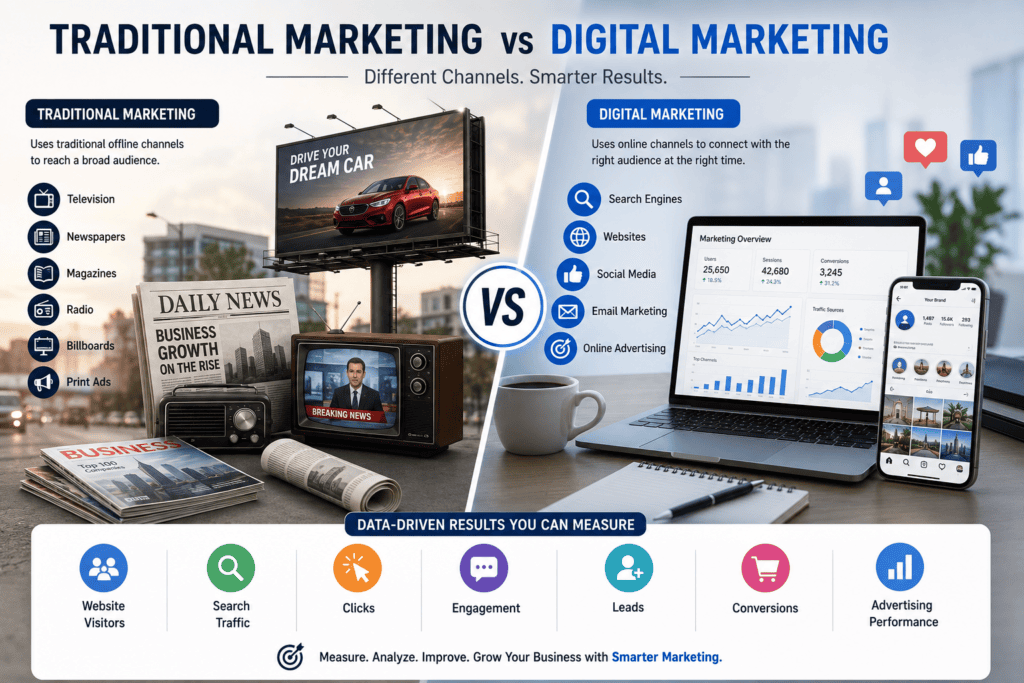
Traditional marketing includes channels such as television, newspapers, magazines, radio, billboards, and physical advertising.
Digital marketing uses online channels such as search engines, websites., social media, email, and online advertising.
The major advantage of digital marketing is the ability to use data to understand how people interact with your campaigns.
For example, businesses can measure:
- Website visitors
- Search traffic
- Clicks
- Engagement
- Leads
- Conversions
- Advertising performance
This information can help businesses improve their marketing strategies over time.
5. How to Create an Effective Marketing Strategy
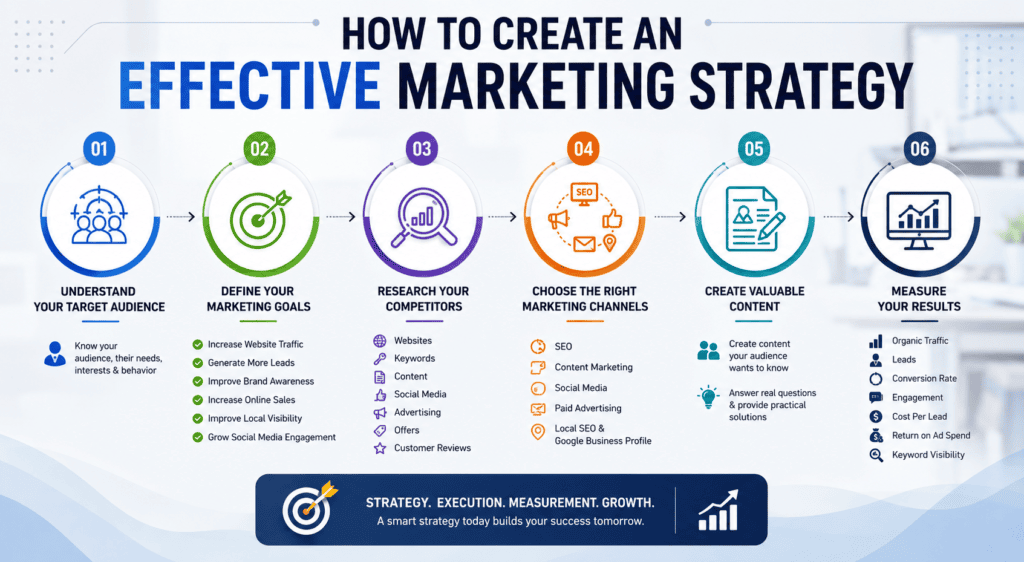
A successful marketing campaign should begin with a strategy rather than random posting or advertising.
Step 1: Understand Your Target Audience
Identify who your ideal customers are and understand the.ir needs, interests, challenges, and online behaviour.
Step 2: Define Your Marketing Goals
Your goals should be specific.
For example:
- Increase website traffic
- Generate more leads
- Improve brand awareness
- Increase online sales
- Improve local visibility
- Grow social media engagement
Step 3: Research Your Competitors
Competitor research can help you understand what other businesses in your industry are doing. Look at their:
- Websites
- Keywords
- Content
- Social media
- Advertising
- Offers
- Customer reviews
The goal is not to copy competitors. It is to identify opportunities to differentiate your business.
Step 4: Choose the Right Marketing Channels
Not every business needs the same strategy.
An e-commerce company may benefit heavily from SEO, content marketing, social media, and paid advertising.
A local business may benefit more from local SEO, Google Business Profile optimization, social media, and location-based advertising.
Step 5: Create Valuable Content
Create content based on what your audience actually wants to know. Instead of writing content only around keywords, answer real questions and provide practical solutions.
Step 6: Measure Your Results
Marketing should be measurable. Track important metrics such as:
- Organic traffic
- Leads
- Conversion rate
- Engagement
- Cost per lead
- Return on advertising spend
- Keyword visibility
Use the data to identify what is working and what needs improvement.
6. Why SEO Matters for Modern Marketing
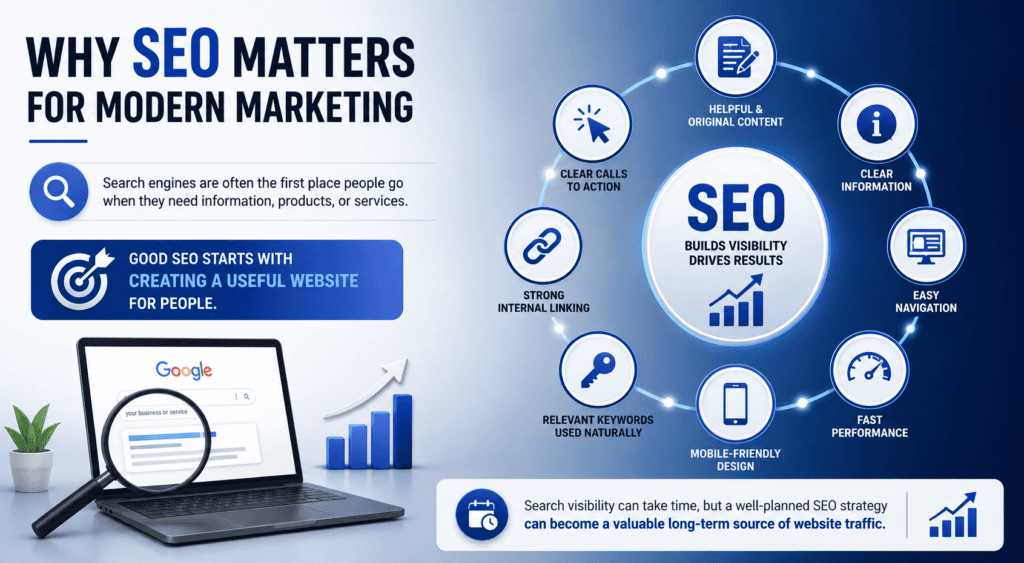
Search engines are often one of the first places people go when they need information, products, or services.
If your website appears when potential customers search for relevant terms, you can attract qualified visitors.
However, SEO is not about trying to manipulate search engines.
Good SEO starts with creating a useful website for people.
Your website should provide:
- Helpful and original content
- Clear information
- Easy navigation
- Fast performance
- Mobile-friendly design
- Relevant keywords used naturally
- Strong internal linking
- Clear calls to action
Search visibility can take time, but a well-planned SEO strategy can become a valuable long-term source of website traffic.
7. How a Digital Marketing Agency Can Help Your Business
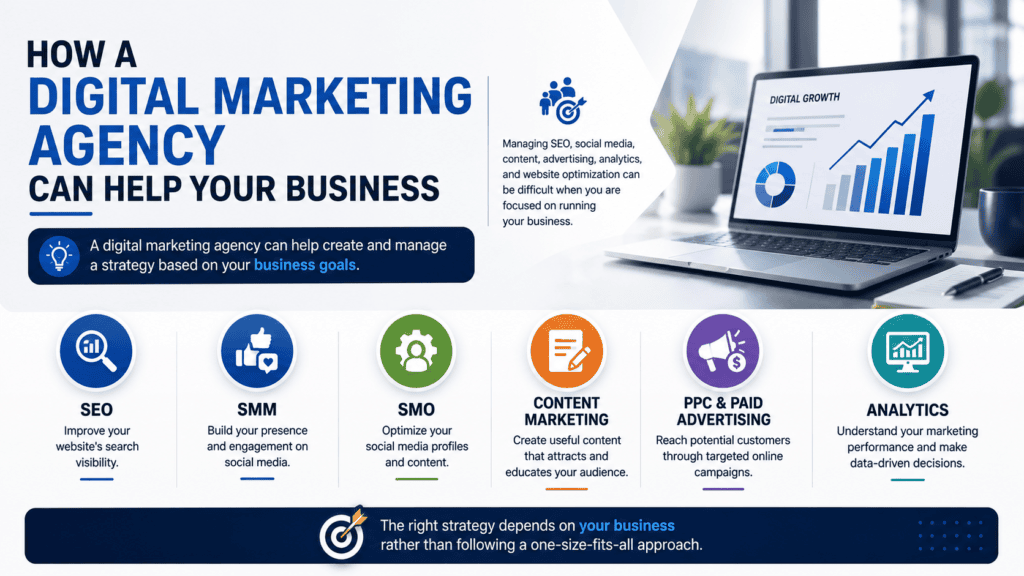
Managing SEO, social media, content, advertising, analytics, and website optimization can be difficult when you are focused on running your business.
A digital marketing agency can help create and manage a strategy based on your business goals.
A professional agency may help with:
SEO: Improve your website’s search visibility.
SMM: Build your presence and engagement on social media.
SMO: Optimize your social media profiles and content.
Content Marketing: Create useful content that attracts and educates your audience.
PPC & Paid Advertising: Reach potential customers through targeted online campaigns.
Analytics: Understand your marketing performance and make data-driven decisions.
The right strategy depends on your business rather than following a one-size-fits-all approach.
8. Common Marketing Mistakes Businesses Should Avoid
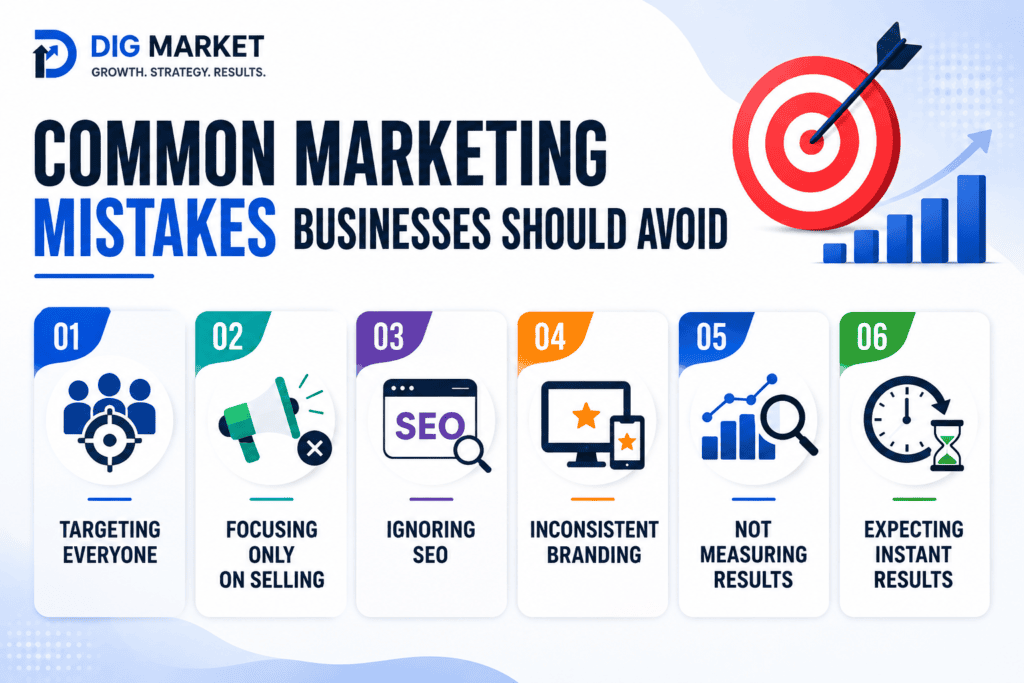
Many businesses invest money in marketing but do not see the results they expect. Some common reasons include:
Targeting Everyone
Trying to reach everyone can make your message less relevant. Define your ideal customer first.
Focusing Only on Selling
People do not want advertisements all the time. Educational and useful content can help build trust before the sale.
Ignoring SEO
If your customers use search engines to find businesses like yours, ignoring search visibility can mean missing valuable opportunities.
Inconsistent Branding
Your website, social media, advertisements, and other promotional channels should communicate a consistent brand identity.
Not Measuring Results
Without tracking performance, it is difficult to know which promotional activities are producing results.
Expecting Instant Results
Some strategies, especially SEO and content marketing, require consistent effort and time. Sustainable growth usually comes from continuous optimization rather than overnight results.
9. The Future of Marketing
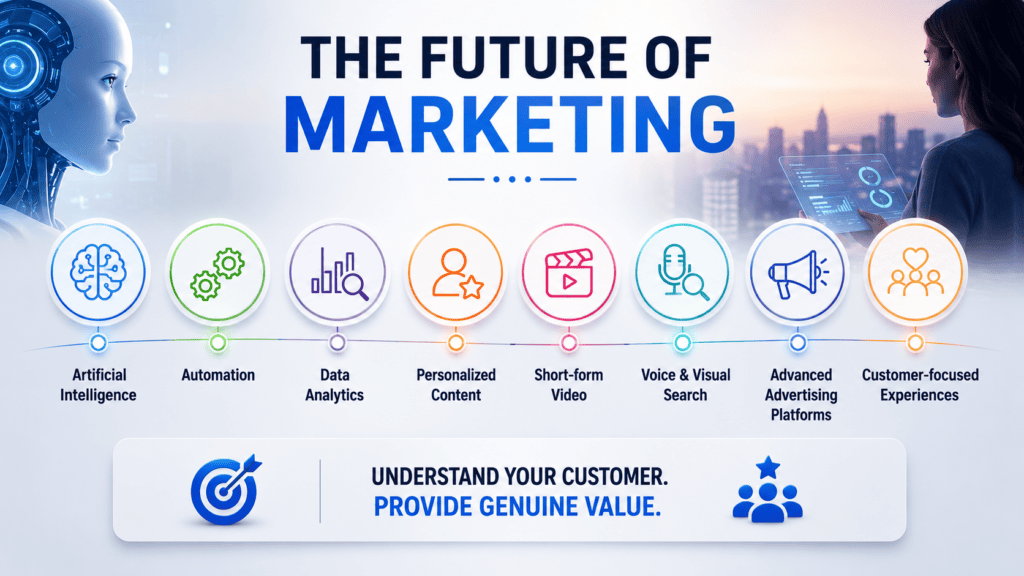
Marketing continues to evolve as technology and customer behaviour. Businesses are increasingly using:
- Artificial intelligence
- Automation
- Data analytics
- Personalized content
- Short-form video
- Voice and visual search
- Advanced advertising platforms
- Customer-focused experiences
But despite these changes, one principle remains important:
Understand your customer and provide genuine value.
Technology can help businesses reach people more effectively, but a successful marketing strategy still depends on understanding what customers actually need.
10. Final Thoughts
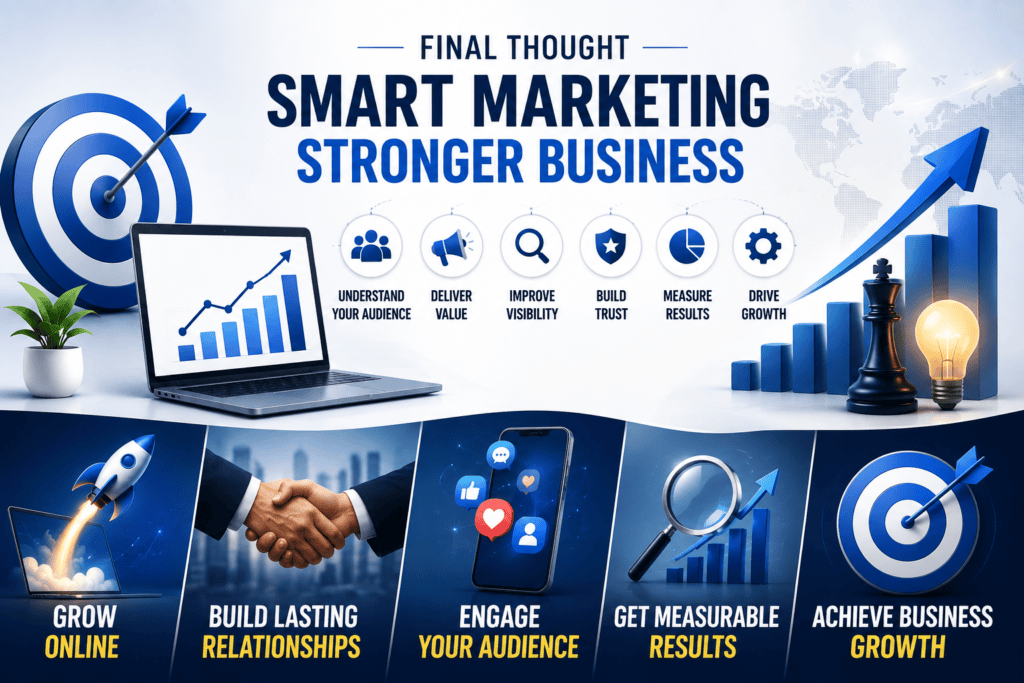
Marketing is not simply about advertising a product or service. It is about connecting a business with the right audience, communicating its value, building trust, and creating long-term customer relationships. For businesses operating in today’s competitive digital environment, having an online presence is no longer enough. You need a clear strategy that combines the right channels, useful content, strong branding, search visibility, and measurable results. Whether you are launching a startup, growing a local business, or looking to improve your existing online presence, the right digital strategy can help you move closer to your business goals.
Ready to Grow Your Business Online?
Your customers are already searching, scrolling, comparing, and making decisions online.
The question is: Will they find your business or your competitors?
Our digital marketing agency helps businesses build a stronger online presence through SEO, SMM, content marketing, website optimization, and data-driven digital strategies. Let’s turn your online presence into a growth opportunity. Contact us today to discuss your digital growth goals.
Frequently Asked Questions About Marketing
What is marketing in simple words?
Marketing is the process of understanding your target audience, communicating the value of your product or service, and encouraging potential customers to choose your business.
Why is digital marketing important?
Digital marketing helps businesses reach potential customers through online channels such as search engines, websites, social media, email, and online advertising.
What are the main types of digital marketing?
Major areas include SEO, SMM, social media optimization, content marketing, PPC advertising, email marketing, local SEO, and analytics.
How does SEO help a business?
SEO can improve a website’s visibility for relevant searches and help attract people who are actively looking for related products or services.
How long does digital marketing take to show results?
The timeframe depends on the strategy, industry, competition, website, budget, and goals. Paid advertising can generate traffic quickly, while SEO and content marketing generally require consistent effort over a longer period.
Why should I hire a digital marketing agency?
A digital marketing agency can help you develop, execute, measure, and optimize your online marketing strategy while allowing you to focus on running your business.